Thinking of a cosmetic surgery to enhance your look? Join the estimated 290 million living adult individuals globally who have undergone this enhancement. Over 38 million procedures per year are currently performed worldwide, anchored by the massive volumes in the United States, Brazil, and South Korea, and supercharged by dominant international hubs like Mexico and Turkey, which collectively log millions of procedures annually for both domestic and international patients. But what if this technology is taken to the next level?
The “uncanny valley” effect of sudden, dramatic transformations has long fascinated the public. From the classic cinematic tropes of a criminal mastermind undergoing radical facial reconstruction to modern masterpieces like Emilia Pérez (2024) – where a cartel leader utilises high-end surgery to start a completely new life – pop culture loves the idea of a physical clean slate. When high-profile individuals appear in the public eye with hyper-smooth, “mirror-like” faces that reflect camera flashes with a synthetic, glass-like sheen, it naturally triggers public intrigue. Yet, while underground networks can manufacture flawless paper trails, falsify digital fingerprints, or even attempt speculative gene-editing and DNA therapies to mask basic markers, modern multi-layered biometrics remain impossible to fully modify. Using data-driven analytics and anatomical science, we break down what high-end aesthetic medicine can actually achieve, why it creates that distinct “shiny” look under intense lighting, and why the 21st-century biometric matrix makes truly faking an identity a scientific impossibility.
The Anatomy of the “Flash-Bulb Sheen”
When an individual undergoes a massive aesthetic overhaul, the result under intense media lighting can look distinctly artificial. This “waxy” or “plastic” texture is rarely the result of a surgeon completely changing a person’s identity; rather, it is a well-documented mechanical reaction of skin to high-strength dermatological treatments. Superficially applied micro-toxing (Botox) temporarily paralyses the tiny arrector pili muscles and constricts sebaceous glands. This stretches the skin’s surface perfectly flat, causing camera flashes to reflect uniformly like a polished mirror rather than diffusing naturally.
Furthermore, popular internal skinboosters saturate the dermis with pure hyaluronic acid. Acting as internal moisturisers, they create a literal “wet-look” or glazed appearance from the inside out, which is heavily amplified by high-intensity photography. Finally, in traditional surgical facelifts, if tissue is pulled taut horizontally rather than vertically, the skin’s natural pores are stretched into flat, elongated shapes. This distinct structural change gives the face a glossy, wax-work texture under studio lighting that triggers immediate public skepticism.
The Biometric Limits of the Knife: Fiction vs. Science
In films like Emilia Pérez, the transition feels absolute because the narrative allows a character to completely disappear from the grid. However, from a hard science perspective, plastic surgery has strict, unbreakable boundaries. While complex operations can modify structural shapes through rhinoplasty, jaw contouring, or fat grafting, they are utterly incapable of altering a person’s underlying genetic ancestry, bone density, or core biological markers.
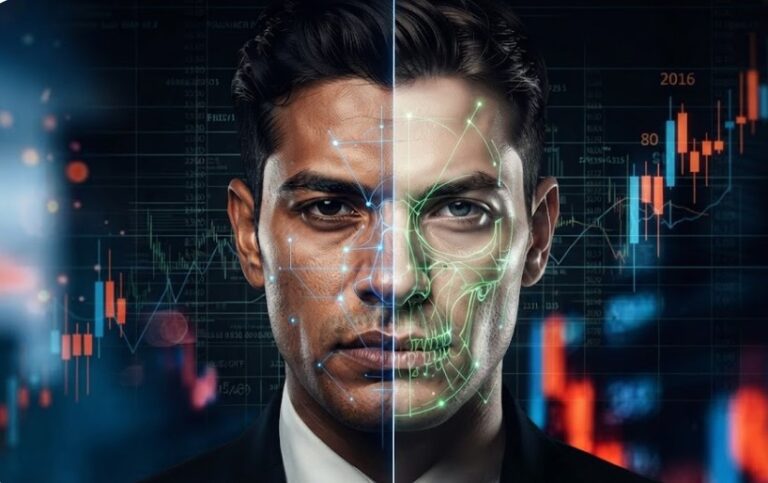
Furthermore, modern biometric systems look far past superficial skin smoothness. While a deep-plane facelift can distort the soft tissue measurements used by basic commercial cameras, it cannot alter the fixed orbital bone structure, the position of the ear cartilage, or the absolute distance between the pupils. Because the structural frame of the human skull remains biologically constant, advanced AI-driven facial recognition systems can easily map unchangeable bone metrics right through surgical alterations, rendering a purely cosmetic attempt at bypassing security obsolete.
Real-Life Precedents: The Non-Gender Surgical Playbook
While cinema dramatises these transitions, real-world criminal history is filled with high-stakes fugitives who attempted to alter their faces without changing their gender identity, yielding mixed results when facing law enforcement scrutiny. In the late 1990s, notorious Mexican cartel boss Amado Carrillo Fuentes (“The Lord of the Skies”) attempted to completely reshape his face and undergo massive abdominal liposuction to evade both U.S. and Mexican authorities. Similarly, in 2007, Colombian drug lord Juan Carlos Ramírez Abadía underwent multiple complex facial surgeries in Brazil – altering his jawline, cheekbones, nose, and eyes – resulting in a distinct, hyper-tight, and glassy public appearance.
More recently, tech-world fugitives and high-profile financial operators have turned to premium, non-invasive clinical routines to radically shift their aesthetic style before entering new markets. However, these cases ultimately highlighted the limitations of physical alteration. In every major historical instance, despite the dramatic changes to their soft tissue, the individuals were either betrayed by their static biometric data – such as voice recognition and fingerprints – or undone by the very distinctiveness of their unnatural, highly altered post-surgery appearance, which drew immediate suspicion from investigators.
The Financial Matrix: Why Hidden Actors Use Proxies, and New Faces
For those operating in high-risk or compromised environments, the physical new face is no longer the primary vulnerability, once the immediate environment can be “convinced” to believe. Explaining why these actors no longer waste time trying to fabricate human beings from scratch, but instead replicate and recreate. In the age of global digitisation, strict Anti-Money Laundering (AML) checks, Know Your Customer (KYC) protocols, and interconnected global flight manifests, a physical face change – how sophisticated it is – still considered structurally vulnerable. Long before a person steps into a room, their digital footprint has already spoken, as automated banking algorithms actively trace the moving capital back to its source. On top of attempting impossible biological transformations, modern bad actors rely on legal abstractions to hide their influence. They utilise intricate networks of offshore shell companies based in low-tax jurisdictions and appoint nominee directors – real, legally compliant individuals paid to put their names on the paperwork – to act as the public face for the operation, be it a high-stakes political donation, a corporate shell play, or an offshore asset transfer. By manipulating the legal and financial matrix rather than the human body, they ensure their own physical identities, true names, and real assets remain completely hidden behind an impenetrable wall of digital data.
While cinema will always give us captivating stories of figures successfully shifting shapes to escape their past, modern data analytics tells a different story. High-end cosmetic procedures can easily grant an individual a youthful, flawless, and ultra-shiny exterior designed for the cameras. However, in the 21st century, a new face is simply a cosmetic veneer. In a world governed by biometric data logs and forensic financial tracking, your identity isn’t written in the smoothness of your skin – it is hardcoded into the system.
About The Author